VAR and Live Betting: How Penalties and Red Cards Shift Odds in Real Time
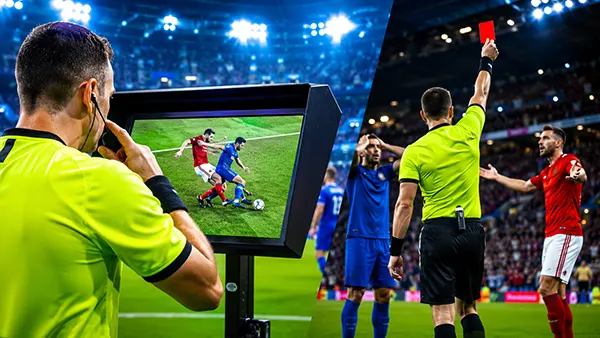
Video Assistant Referee technology has changed far more than refereeing decisions in football. Since its introduction across major leagues and international tournaments, VAR has also transformed the live betting market. Modern bookmakers now react within seconds to controversial moments, especially penalties, disallowed goals and red cards. Odds no longer move only after a final referee decision. Instead, they begin shifting during the VAR review itself, creating a fast-moving environment where timing has become just as important as football knowledge.
How VAR Reviews Influence Live Betting Markets
Before VAR became standard in elite football, bookmakers mainly adjusted odds after confirmed match events. A penalty awarded by the referee would immediately affect the market, while disputed incidents usually had little impact until play resumed. Today, a VAR check alone can trigger significant changes in live prices. Betting operators use automated trading systems linked to real-time match feeds, allowing them to suspend or recalculate odds almost instantly.
One of the clearest examples can be seen during possible penalty incidents. When VAR initiates a review for handball or dangerous contact inside the box, bookmakers often freeze key markets such as match winner, next goal scorer and total goals. If the penalty is confirmed, the attacking side’s odds shorten rapidly. In Premier League matches during the 2025/2026 season, some operators reduced the favourite’s live odds by over 35% within seconds after a VAR-confirmed penalty.
The same pattern applies to disallowed goals. A team may appear to have scored, pushing live odds strongly in their favour, only for VAR to identify an offside position moments later. Once the goal is overturned, odds return close to their previous level. These sudden reversals create volatility that did not exist in football betting a decade ago.
Why Timing Matters More Than Prediction
In-play betting has become increasingly dependent on reaction speed. Many experienced bettors now focus less on predicting the entire match and more on identifying situations where odds move too aggressively during VAR interruptions. Markets can overreact emotionally, especially when large clubs are involved or when a controversial decision changes momentum.
Professional traders monitor referee body language, player reactions and broadcast replays before bookmakers fully reopen the market. During Champions League fixtures, delays between the live television feed and betting systems can create small but valuable timing windows. However, these opportunities are becoming shorter as bookmakers continue improving data processing speeds.
Another important factor is emotional betting behaviour. Casual bettors often place wagers immediately after dramatic VAR decisions without considering remaining match conditions. A red card in the 20th minute, for example, does not automatically guarantee defeat for the team reduced to ten players. Historical data from Europe’s top five leagues between 2023 and 2026 shows that home teams receiving an early red card still avoided defeat in roughly 28% of matches.
The Impact of VAR-Confirmed Penalties on Match Odds
Penalties remain the single most influential VAR-related event for live betting markets. Statistical models used by bookmakers treat penalties as extremely high-probability scoring opportunities. Across major European competitions in 2025, penalty conversion rates remained close to 78%, making these situations critical for odds calculation.
When a penalty is awarded after a VAR review, bookmakers reassess multiple markets simultaneously. Match winner odds change first, followed by over/under goal lines, both teams to score markets and player scoring props. If a penalty is awarded late in a balanced match, the impact becomes even stronger because there is less time for the opposing side to recover.
VAR penalties also affect psychological momentum. Teams that concede controversial penalties often lose defensive organisation for several minutes afterwards. Bettors who understand tactical responses can identify opportunities beyond the immediate goal market. Some clubs become significantly more aggressive after conceding, increasing the likelihood of corners, cards or counter-attacking chances.
How Bookmakers Manage Risk During VAR Reviews
Bookmakers face substantial risk during live VAR situations because information reaches audiences at different speeds. Stadium spectators, television viewers and data providers all receive updates at slightly different moments. To reduce exposure, betting operators frequently suspend markets while reviews are ongoing.
Advanced sportsbooks now rely heavily on artificial intelligence and automated pricing algorithms. These systems evaluate the probability of a penalty being confirmed based on referee tendencies, competition data and historical VAR outcomes. Referees with higher rates of overturned decisions can influence how aggressively bookmakers adjust provisional odds.
There is also a major difference between leagues. VAR usage in the Premier League, Serie A and Bundesliga has become relatively consistent, while smaller competitions may still show slower review processes or inconsistent intervention thresholds. This inconsistency can create pricing inefficiencies, particularly in less monitored betting markets where traders have fewer data points available.

Red Cards, Tactical Changes and Long-Term Market Movement
VAR has increased the number of red cards issued for dangerous tackles, violent conduct and denial of clear goal-scoring opportunities. Modern slow-motion replays allow referees to identify incidents that may have gone unnoticed in previous years. As a result, live betting models now place greater emphasis on disciplinary risk.
A VAR-confirmed red card usually causes immediate movement in possession-related markets, total goals and match result odds. However, the scale of adjustment depends on several variables. The timing of the dismissal, the tactical structure of the affected team and the overall quality gap between both sides all play a major role.
For example, elite defensive teams can sometimes adapt effectively after losing a player, particularly if the dismissal occurs late in the match. On the other hand, attacking teams that rely heavily on pressing systems often struggle immediately after a sending-off. Bettors analysing tactical flexibility usually gain a stronger understanding of whether bookmakers have overestimated the impact of a red card.
How Experienced Bettors Adapt to the VAR Era
The growth of VAR has encouraged more analytical approaches to football betting. Successful live bettors increasingly rely on tactical analysis, referee statistics and behavioural patterns rather than simple form tables. Understanding how certain referees use VAR can provide valuable context before a match even begins.
Some bettors now track average VAR review duration, penalty frequency and card intervention rates across different leagues. Competitions with frequent reviews often experience longer market suspensions, which affects available betting opportunities. Faster leagues may reopen odds more quickly, leaving less time for analysis.
As of 2026, VAR continues shaping the relationship between football and live betting in increasingly sophisticated ways. Odds react not only to goals and cards themselves, but also to uncertainty, anticipation and psychological momentum during reviews. For anyone involved in live football betting, understanding how VAR influences real-time market behaviour has become an essential part of modern match analysis.